





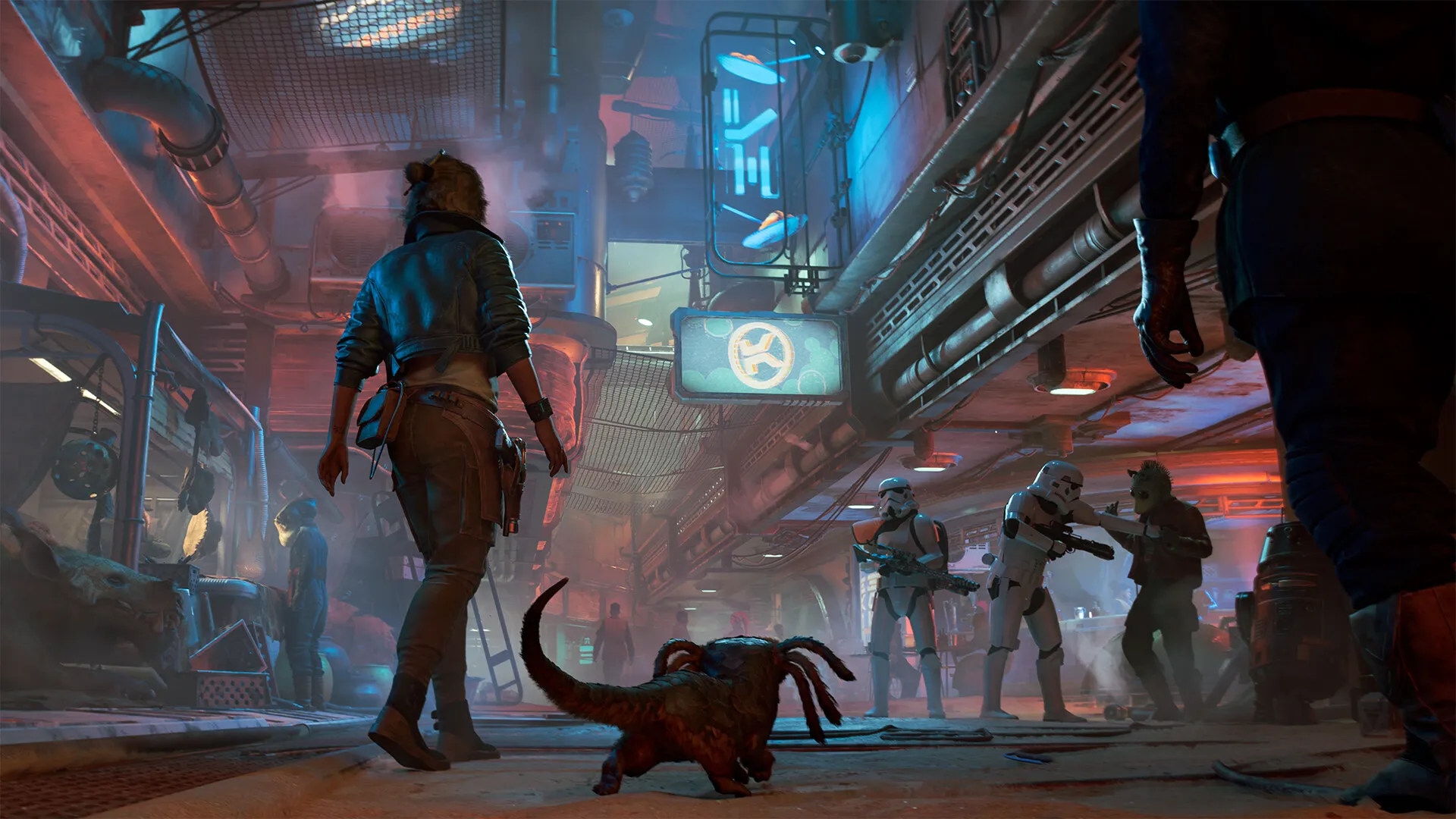
Star Wars Outlaws places you in the boots of Kay Vess, a daring scoundrel navigating syndicates, outlaws, mercenaries and Imperial pressure across the Outer Rim. More than a classic open-world adventure, this game demands negotiation, stealth, clever combat and a sharp understanding of its criminal ecosystem. Surviving isn’t just about firepower—it’s about reading the room, handling reputation, making tight escapes and leveraging the right allies. This 3000-word guide takes you chronologically through the skills, systems and decision-making you need to master if you want to thrive as an outlaw. Every section explores a major gameplay phase with deep mechanics, practical tips and advanced insights for long-term success.
Beginning Your Journey
Your adventure begins with Kay’s introduction to the criminal underworld and her early attempts to survive bounty hunters and syndicate disputes. During this phase, the most valuable skill is situational awareness. The game encourages you to observe before acting. Notice how NPCs move, how guards talk, and how syndicate members interact. These patterns reveal vulnerabilities you can exploit later.
Pay attention to environmental prompts. Star Wars Outlaws is filled with crates, vents, low structures and hanging cables that allow creative movement. Practice jumping, sliding, crouching, and calling your companion Nix at the right time. These early hours exist to teach you the game’s rhythm—slower than typical action RPGs, but more deliberate, emphasizing intent over chaos.

Learning Movement And Companion Control
Movement is essential because Star Wars Outlaws doesn’t treat Kay as a superhero. She’s agile but vulnerable. Mastering her mobility defines how well you survive crowded cantinas, Imperial checkpoints and hostile scavenger camps. Movement has weight, and momentum affects combat. Sprinting creates noise, sliding helps reposition, and climbing consumes stamina. Understanding these factors lets you approach encounters tactically rather than impulsively.
Your companion, Nix, is equally important. Learning how to direct Nix at the right moment becomes a hallmark of high-level play. You can command Nix to distract guards, fetch items, trip alarms intentionally, or gather intel. These micro-actions create windows of opportunity—especially during stealth missions where one misstep can cost you reputation or credits. Treat Nix not as a pet but as a strategic extension of Kay’s abilities.
Navigating Criminal Syndicates
The outer rim features several syndicates, each with unique philosophies, rewards and hostility levels. Understanding these factions ensures safer travel and better mission rewards. Syndicates track your actions dynamically; helping one may provoke another. This creates a branching social system rather than a linear loyalty path.
When choosing which syndicate to support, think long-term. Smugglers' clans may offer tech upgrades, while mercenary groups provide firepower. Illegal traders help with rare materials, but Imperial-aligned groups may open safer trade routes. Each has pros and cons. Study their territories, their enemies and their mission types.
To navigate this system effectively, treat syndicates like resources. Don’t blindly commit your loyalty. Instead, build medium trust across several groups until you understand which rewards align best with your desired playstyle—stealth, combat, smuggling or diplomacy.
Mastering Stealth And Silent Infiltration
Stealth is a core mechanic and often more effective than combat. Outposts, vaults, starports and hideouts feature multiple infiltration paths—vents, rooftops, cargo lines and maintenance tunnels. Learning level geometry is one of the smartest investments you can make, as stealth missions reward higher credits and lower risk.
Stealth revolves around:
• Timing enemy patrol cycles
• Using shadows and cover
• Silencing alarms before they trigger
• Deploying Nix to distract or steal
• Manipulating lighting to create openings
When infiltrating a syndicate vault, avoid emotional decisions. Do not rush when you see an objective marker. First, circle the room, watch guard patterns and isolate your target. Many areas include shortcuts for players who observe carefully—hidden ladders, destructible panels, or double-layered ventilation ducts.
Silent Takedowns
Silent takedowns are powerful but dangerous. If an enemy is near another guard or camera, the body may be spotted. Dragging unconscious guards into dark corners reduces risk significantly.
Hacking And System Control
Hacking terminals unlock shortcuts, disable security drones or reroute patrol units. But hacking makes noise. Time it when ambient noise conceals your action.
Handling Combat And Gear Optimization
Combat in Star Wars Outlaws is tactical, not spray-and-pray. Kay’s blaster is customizable, but accuracy, ammo type and positioning matter. Moving while shooting reduces accuracy; staying still increases precision. Once you master this, fights become controlled rather than chaotic.
Your gear includes:
• Blaster mods (cooldowns, accuracy, fire types)
• Gadgets (EMP mines, stun packs, scanners)
• Wearable upgrades (armor, stealth cloaks, movement boosts)
• Consumables (med shots, adrenaline injectors)
Upgrade thoughtfully. Some players invest early in offense but neglect survival tools. Instead, prioritize stealth and mobility in the early game. Once you build economic stability, you can shift toward higher firepower and advanced blaster mods.
Cover Systems
Cover is your lifeline. You must learn when to peek, when to blind fire and when to reposition. Outlaws rewards fluid movement, so avoid static gunfights unless you have a guaranteed advantage.
Crowd Control
Against larger groups, don’t panic. Use EMP mines to disable tech units, command Nix to stagger a high-value target, and roll between cover points to divide enemy formation.

Exploring Open Worlds And Hidden Zones
Each planet features unique biomes, cultural hubs, wildlife threats and black-market routes. Exploring isn’t just for scenery—it yields reputation opportunities, crafting materials, artifacts and rare gear.
When exploring:
• Talk to background NPCs—they often reveal shortcuts to missions
• Search alleyways for black-market dealers
• Hunt wildlife only when necessary; loud battles attract patrols
• Watch skies for Imperial shuttles indicating nearby sweeps
Exploration is also tied to Nix. Some secrets are reachable only when ordering Nix to climb, squeeze through small openings or fetch unreachable loot.
Planets themselves have layered stories. A dusty outlaw moon might hide a criminal archive beneath its canyons, while a bustling trade station might connect to abandoned Imperial tunnels. Each zone rewards curiosity with world-building and tangible resources.
Smuggling, Negotiation And Credits Management
Credits fuel your survival. Every upgrade, favor, bribe or ship maintenance job requires steady income. Star Wars Outlaws treats smuggling as a nuanced economic game.
Smuggling includes:
• Transporting illegal goods past Imperial scanners
• Negotiating fees with shady vendors
• Taking risky missions for higher profit
• Building trust with contacts who sell rare cargo
• Avoiding patrolling starfighters during planetary exit
Negotiation is equally important. You can talk your way out of fees, lower prices or even turn enemies into temporary allies. The key is understanding character archetypes: mercenaries respect confidence, traders respect logic, and criminals respect leverage.
Credits must be spent wisely. Avoid splurging early on bulky armor that slows movement. Instead, invest in ship repairs, stealth tools and essential blaster upgrades.
Mastering Your Ship And Dogfighting
Star Wars Outlaws includes robust dogfighting mechanics. Kay’s ship is small but agile, requiring finesse rather than brute strength. fights emphasize maneuverability, energy control and environmental awareness.
Dogfighting essentials:
• Divert power between engines, shields or weapons
• Use asteroid fields as natural cover
• Roll to break target lock
• Burst fire instead of overheating your cannons
• Use countermeasures sparingly—they’re valuable
Upgrading your ship is a long-term process. Prioritize engine tuning and evasion boosters before heavy weaponry. A fast ship survives longer than a strong one.
Landing and takeoff sequences are also strategic. Imperial blockades may surround starports, requiring detours or stealthy low-orbit escapes. Each planet has unique gravity and atmospheric turbulence that alters how your ship handles.
Making High-Stakes Choices
Many missions involve moral choices that impact syndicates, NPC relationships and access to future missions. Choices in Outlaws rarely fall into “good vs. evil.” Instead, they revolve around practicality, loyalty and personal risk.
Your decisions affect:
• Syndicate trust levels
• Mission difficulty
• Access to black-market vendors
• Prices of illicit goods
• Whether bounty hunters pursue you
• How much Imperial heat you attract
Think before making major decisions. Helping a syndicate might earn a powerful ally but turn another group hostile. Betraying a trader may earn quick credits but permanently close future trade routes. Star Wars Outlaws remembers your choices long after you make them.
Consequence Chains
Some decisions trigger long-term consequence chains. These lead to new missions, ambushes, rewards or hidden endings.
Study your situation, not your emotions. Outlaws rewards strategy over impulse.
Building Your Reputation And Reaching Endgame
Reputation is the backbone of endgame success. By now you’ve met syndicates, navigated dogfights, survived stealth missions and built a reliable economy. The endgame expands these systems by increasing stakes, enemy difficulty and narrative complexity.
At this stage:
• Syndicates expect more in return
• Imperial surveillance increases
• High-paying contracts come with high risks
• Choices become permanent
• Major storylines converge into multi-faction conflicts
High-level missions demand everything you’ve learned: stealth precision, combat mastery, ship agility, negotiation, and faction understanding. Outlaws’ endgame is less about brute strength and more about political maneuvering and survival instinct.
Reaching the ending requires aligning your assets—alliances, credits, ship capability and personal upgrades—to support your final choice. Whether you end the game as a notorious outlaw, a respected smuggler, or an uneasy ally of a major syndicate depends entirely on the path you’ve crafted.
Conclusion
Star Wars Outlaws is more than a space adventure—it is a tactical, story-rich journey through syndicate politics, stealth infiltration, smuggling networks and high-stakes dogfights. Mastering the game requires patience, observation and thoughtful decision-making. By learning movement, handling factions, optimizing combat, exploring planets, managing credits, negotiating smartly, controlling your ship and making impactful choices, you become a true outlaw capable of bending the Outer Rim to your will. Every decision shapes your future, and every mission tests your wit. Outlaws rewards clever players who think several moves ahead and embrace the chaotic beauty of living on the edge.