
Brookhaven Is a Town-Sized TV Show: Everyone Has a Role, Nobody Has the Script
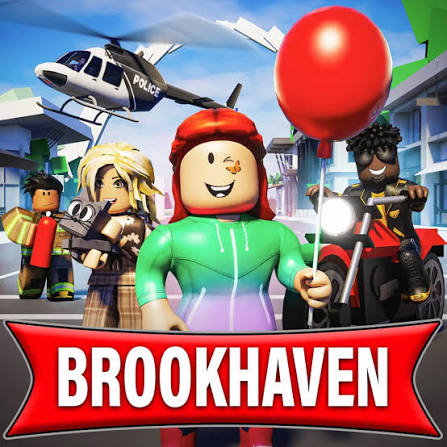
Imagine a television show where nobody knows the next episode's plot, every actor can rewrite their character, and the audience might suddenly become the villain.
Welcome to Brookhaven.
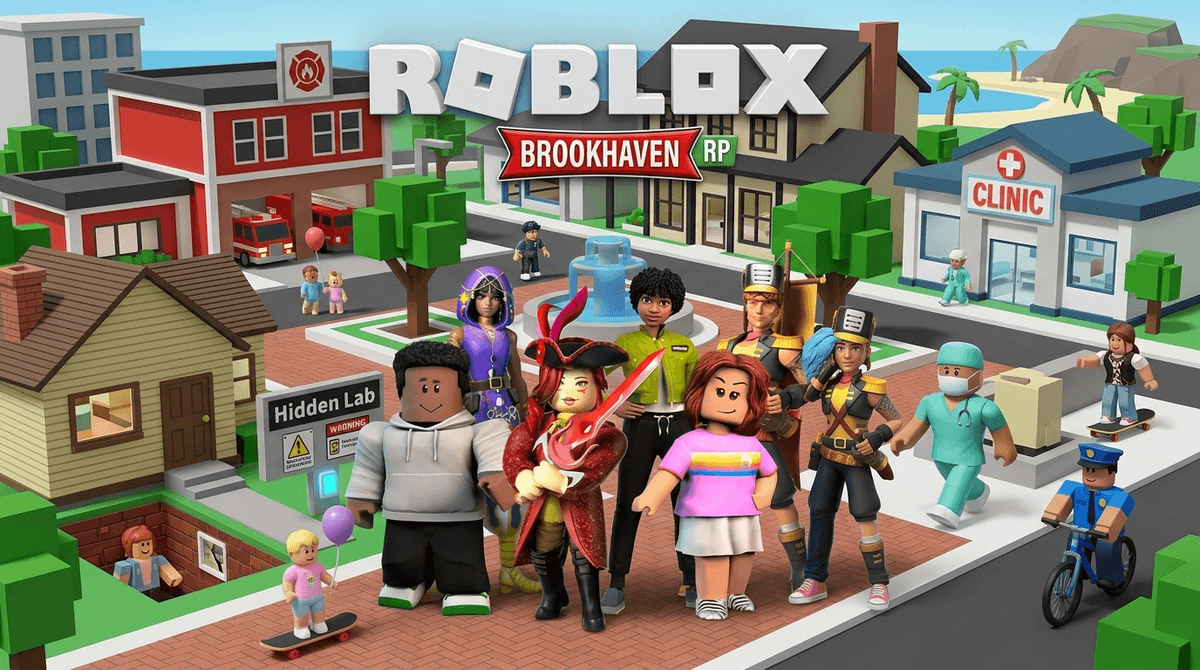
At first glance, it looks like an ordinary town. There are houses to live in, cars to drive, places to visit, jobs to take on, and familiar locations such as a school and a hospital. But the real magic of Brookhaven is not simply the town itself. It is what happens when hundreds of players arrive with completely different ideas about what their day should look like.
One person might be building the perfect dream life. Another is investigating a suspicious location. A third has decided that an ordinary trip to the grocery store must somehow become the most dramatic event in town history.
Nobody needs a script. Nobody has to follow a main quest. The stories happen because players decide that something interesting should happen.
That makes Brookhaven feel less like a conventional video game and more like a giant, constantly changing television universe—with every player competing for the most unforgettable storyline.
1. Episode One: The Town Where Everyone Has a Secret
Every great fictional town has something unusual hiding beneath its everyday appearance.
In one television series, the perfect neighborhood conceals a mystery. In another, a peaceful small town becomes the center of a conspiracy. Brookhaven offers the ingredients for similar stories through its locations, structures, and community-driven exploration.
A house might be more than a place to sleep. It could be the home of a wealthy family, the headquarters of a secret organization, or the setting for a dramatic family reunion.
A hospital could become the center of a medical drama. A school could host a comedy about friendships and rivalries. A police station might serve as the starting point for an imaginary investigation that grows more ridiculous with every new character involved.
The beauty of these possibilities is that none of them needs to be the official story of Brookhaven.
Players can create their own explanations for what happens around them. Two people standing in the same location may imagine completely different situations, and their stories can collide without warning when they begin interacting.
A town becomes interesting when its residents give it meaning. In Brookhaven, that meaning changes whenever a new cast of players arrives.
2. The House Is Not a House. It Is a Character Introduction.
In ordinary life simulation games, a house might be something to decorate, upgrade, and admire. In Brookhaven, it can also reveal who a character is supposed to be.
Picture a modern mansion with a family that behaves as though every breakfast is a royal ceremony. Imagine a small, comfortable home belonging to a mysterious character who rarely talks about their past. Or consider an empty-looking property that becomes the base for a group of friends planning their next imaginary adventure.
The building supplies the visual setting, but the residents supply the personality.
A luxurious home might suggest success, although its owner could be secretly lonely. A modest house could belong to the most influential person in the neighborhood. A perfectly organized family home might conceal the most chaotic group of characters in town.
That contrast creates comedy and drama without requiring elaborate dialogue.
The same property can even change meaning over time. What begins as a family home might become a business, a headquarters, or the setting for a rivalry between former friends.
This is why customizing a living space can be part of storytelling rather than merely decoration. The environment helps establish the tone before a character even says a word.
In Brookhaven, the address tells other players where you live. The story you attach to it tells them who you are.
3. Brookhaven High: A Sitcom That Writes Itself
Every long-running television sitcom eventually develops a familiar cast: the overachiever, the class clown, the dramatic best friend, the mysterious newcomer, and the person who somehow turns every minor inconvenience into a crisis.
Brookhaven's school is a natural stage for this kind of comedy.
Imagine a new student entering the building and immediately claiming to be the most famous person in town. Another student challenges that claim, a teacher tries to restore order, and a random visitor accidentally becomes the center of the argument.
Within minutes, an ordinary school day has turned into a full episode.
The fun comes from letting characters exaggerate their personalities. A competitive student can treat a simple classroom disagreement like a championship match. A best-friend duo can develop an absurdly complicated secret handshake. A new arrival might insist that their mysterious past is too complicated to explain before lunch.
The story does not need to be realistic to be entertaining. It needs characters who react to one another in interesting ways.
And because other players are not following a fixed script, the situation can change at any moment. Someone might decide to introduce an unexpected rival, turn a friendship into a feud, or redirect the entire scene with an improvised announcement.
The result is a sitcom with no guaranteed ending—and sometimes, that makes it funnier than anything a writer could plan in advance.

4. The Police, the Criminal, and the Person Who Just Wants a Quiet Afternoon
A good fictional town needs conflict. Without it, everyone would go about their business, nothing unusual would happen, and the show would end before the opening credits finished.
Brookhaven's roleplay possibilities can turn even familiar jobs into the foundations of elaborate imaginary conflicts.
A police officer might be investigating a fictional theft. A suspicious character might be trying to convince everyone that they are completely innocent. A reporter could arrive to cover the incident, only to become part of the story themselves.
Then a completely unrelated player drives past and decides to join the investigation.
Suddenly, the cast has grown, the mystery has become more complicated, and the original problem is barely recognizable.
What makes this kind of roleplay entertaining is that characters can disagree about what is happening. One person may believe they are playing the serious investigator, while another approaches the same scene as a comedy. Someone else might invent a new twist that changes the entire direction of the interaction.
These different interpretations do not necessarily ruin the story. They can become the story.
Of course, the most enjoyable roleplay works best when everyone involved is comfortable with the scenario. A good fictional rivalry creates opportunities for other players to participate instead of forcing them into a scene they never agreed to join.
The goal is not to control everyone else's character. It is to create a situation that gives everyone a reason to react.
5. The Brookhaven Mystery Department: Every Strange Detail Deserves a Theory
Brookhaven's appeal is not limited to everyday roleplay. Its official world also encourages exploration and discovery, with the developers highlighting unusual doors, glowing rooms, and secrets that players have investigated over time.
That atmosphere makes the town feel like a mystery series waiting for its next detective.
Suppose a character discovers a strange entrance. Another insists that it must lead somewhere important. A third claims to have heard a rumor about what lies beyond it. Before long, a group has formed around a theory that nobody can fully prove.
This is where imagination becomes a form of collaborative storytelling.
One player becomes the investigator. Another plays the skeptical friend. A third takes the role of a witness who may know more than they are willing to reveal.
The best part is that a mystery does not always need a definitive answer to be entertaining. The investigation itself can generate new scenes, rivalries, jokes, and unexpected discoveries.
Players can also invent fictional explanations of their own, treating familiar buildings and locations as clues in a much larger narrative.
The difference between a mysterious town and an ordinary one is not always what is hidden inside it. Sometimes, it is the number of questions its residents are willing to ask.
6. The Most Important Character Might Be Your Best Friend
In a world full of vehicles, houses, and locations to explore, it is easy to focus on the things a player can own or access. But the most memorable Brookhaven sessions often depend on the people sharing the experience.
A friend can turn a quiet evening into an imaginary road trip. A group can invent a family drama that develops over several sessions. Two rivals can spend an entire afternoon competing over something completely unimportant, only to become unexpected allies when a bigger problem appears.
These interactions create a kind of history that does not always exist in the game's official systems.
Maybe your group has a recurring joke about one character who always arrives late. Perhaps a particular house has become the unofficial meeting place for every major event. Maybe one player has developed a reputation for turning completely normal situations into spectacular disasters.
Over time, these repeated moments become part of your group's personal version of Brookhaven.
That is the difference between simply sharing a server and building a shared fictional world. The setting provides the possibilities, but relationships make those possibilities memorable.
A house can be replaced. A car can be changed. A character can adopt a new identity. Yet the story your friends remember from a ridiculous afternoon may become the reason everyone returns.

7. The Great Genre Switch: From Family Drama to Action Movie in Five Minutes
One of Brookhaven's most entertaining qualities is how quickly its atmosphere can change.
A session may begin as a peaceful family story. Someone is preparing breakfast, another character is getting ready for school, and everyone appears to be living an ordinary day.
Then somebody announces that the family is moving to another country.
Another player claims to have discovered a shocking secret. A supposed business meeting becomes an argument. Someone arrives in a flashy car, announces that they are a celebrity, and refuses to explain why they are visiting the neighborhood.
Suddenly, the family drama becomes a comedy. A comedy becomes a mystery. The mystery becomes an action movie, and the original breakfast scene is forgotten entirely.
This flexibility is a major part of roleplay's creative appeal. Players are not necessarily committed to a single genre, tone, or long-term objective.
They can build a scene around whatever interests them at the moment.
The trick is to recognize when a story has naturally reached its next turning point. A character's surprising decision can introduce a new conflict, while a simple misunderstanding can give everyone a reason to improvise.
The result resembles a television series that constantly experiments with its own identity.
Some episodes are wholesome. Some are chaotic. Others are so strange that the people involved may struggle to explain what happened afterward.
That unpredictability is not a problem to solve. It is one of the show's best features.
8. Every Player Is an Actor, Director, and Occasional Chaos Consultant
Traditional entertainment has a clear division of labor. Writers develop the story, directors shape the scenes, actors portray the characters, and audiences watch everything unfold.
Brookhaven blurs those roles.
A player might begin by portraying a character, then introduce a new plot point, and finally become the person organizing the next scene. Another player may contribute nothing to the original idea but accidentally create the most memorable moment of the session.
Someone who planned a serious dramatic encounter might discover that the entire group prefers comedy. A carefully prepared family storyline might become an elaborate mystery because one player asks a question nobody expected.
This shared authorship creates a different kind of creative experience.
No single participant necessarily controls the whole story. Instead, the narrative develops through a series of decisions, reactions, misunderstandings, and improvisations.
That also means that being entertaining does not require being the loudest person in the server. A character who responds thoughtfully, introduces a small complication, or supports someone else's idea can be just as important as the person driving the main plot.
The most successful scenes give other players something to work with.
An unanswered question invites investigation. An unexpected announcement invites a reaction. A new character creates the possibility of a new relationship.
In a world where everyone has the potential to influence the next scene, collaboration is often more interesting than trying to become the sole star of the show.
9. Your Personal Brookhaven Is Different from Everyone Else's
Two players can spend the same amount of time in Brookhaven and walk away with completely different memories.
One may remember a peaceful evening spent exploring the town with friends. Another may recall an elaborate family storyline that continued across several sessions. Someone else might remember a mysterious location, an improvised police investigation, or a completely ridiculous misunderstanding that somehow involved half the server.
These experiences can happen in the same world without contradicting one another.
That is because Brookhaven's identity is not defined exclusively by buildings, vehicles, and other in-game features. Its roleplay culture allows players to give familiar places new purposes and create personal traditions around them.
For one group, a particular house might represent the center of their fictional family. For another, the same location could be a business headquarters or the setting of a long-running rivalry.
A familiar street can become associated with a memorable chase. A public building can become the recurring location for everyone's imaginary meetings. Even an ordinary drive can turn into a personal story if the right people happen to be involved.
The town is shared, but the memories are individual.
And because every new session brings the possibility of another unexpected interaction, the story never needs to remain exactly the same.
10. The Finale That Never Really Ends
Most television series eventually reach a finale. The mysteries are resolved, the characters make their final decisions, and the audience says goodbye.
Brookhaven is different because there is no single ending that every player must reach.
A character can retire from one storyline and begin another. A fictional family can change, a rivalry can disappear, or a new group of friends can inspire an entirely different adventure. The town continues to offer a setting for these stories without requiring everyone to follow the same narrative.
This makes Brookhaven less like a finished television show and more like a studio that stays open for the next production.
Some players will want to build detailed, ongoing stories. Others will prefer short improvisational scenes that end as suddenly as they begin. Still others may simply enjoy exploring the town and seeing what other people are doing.
All of these approaches can coexist.
The real achievement is not necessarily creating the biggest house, driving the most impressive vehicle, or becoming the most recognizable character in town. It can be as simple as making a session interesting enough that your friends want to return for another episode.
And when a story does end, the next one is already waiting to be invented.
Conclusion: Welcome to the Show That Belongs to Everyone
Brookhaven succeeds as a roleplay world because it leaves so much room for personal interpretation.
Its houses become homes, headquarters, and sources of imaginary conflict. Its familiar public locations become stages for comedies, mysteries, and dramas. Its players create relationships, invent characters, and transform ordinary activities into stories that could never be predicted in advance.
That freedom changes the meaning of playing.
You are not simply visiting a virtual town. You are participating in a shared creative experiment where the cast keeps changing, the genre is never guaranteed, and the smallest interaction can become the beginning of something unexpected.
One day, Brookhaven might be a peaceful neighborhood sitcom. The next, it might become a detective drama, a school comedy, or a spectacularly chaotic family saga.
There is no permanent script and no single character who has to remain the main star.
The town provides the setting. The players bring the imagination.
And somewhere in Brookhaven, the next episode is already beginning.