.webp) webgamereview.com
webgamereview.comTop 5 Games With the Most Mind-Bending Worlds – Reality Is Just Another Puzzle
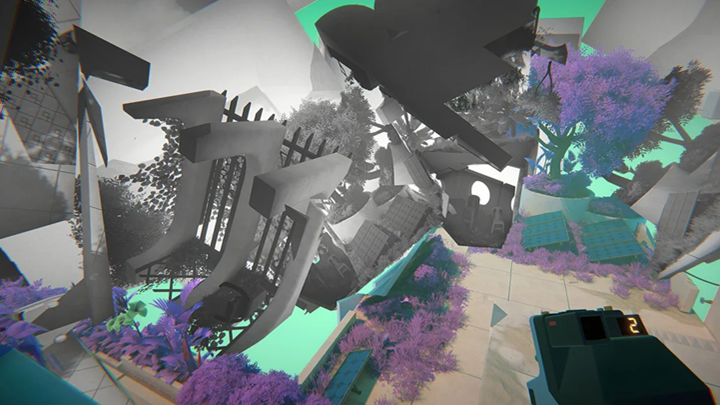
Some games challenge players with powerful enemies or complicated puzzles. Others challenge something much more fundamental: the way players understand space, perspective, and reality itself.
Imagine walking through a doorway and appearing somewhere completely unexpected, changing gravity to reach impossible locations, or discovering that a room is much larger on the inside than it appears from the outside.
These games transform familiar environments into extraordinary experiences. Their worlds constantly challenge expectations, encouraging players to experiment with unusual mechanics and question what is actually possible.
Here are five games with some of the most mind-bending worlds in gaming.
Why Mind-Bending Worlds Matter in Games
Unusual world mechanics can turn exploration into an intellectual adventure.
Players enjoy these experiences because they:
- Challenge conventional thinking
- Create surprising discoveries
- Introduce original puzzle mechanics
- Reward experimentation
- Make familiar spaces feel extraordinary
1. Superliminal
Superliminal turns perspective into the foundation of its gameplay. Objects change size depending on how players pick them up and place them in the world.
A small chess piece can become enormous, while a seemingly massive object can shrink into something easy to carry. These mechanics transform ordinary rooms into puzzles where perception matters more than physical dimensions.
As players progress, the game introduces increasingly surprising situations that challenge their understanding of scale and space.
Why It Stands Out
- Perspective-based puzzles
- Objects that change size
- Unexpected environmental tricks
- Creative spatial challenges
- Constantly shifting expectations
2. Portal 2
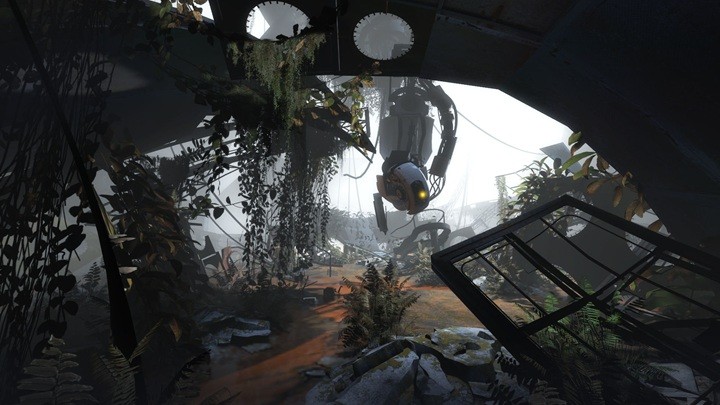
Portal 2 gives players a portal gun that connects two different locations through paired openings. A simple wall can become an entrance to another part of a room, while momentum can launch players across enormous gaps.
The real challenge comes from understanding how portals interact with gravity, movement, and the surrounding environment. Players must learn to think in terms of connected spaces rather than traditional pathways.
The result is a puzzle experience where the environment itself becomes something players can manipulate.
Why It Works
- Portal-based transportation
- Momentum-driven puzzles
- Creative environmental interactions
- Clever level design
- Satisfying problem-solving
3. Antichamber
Antichamber is built around a surreal environment where ordinary spatial rules frequently stop making sense.
Corridors can lead somewhere unexpected, paths may change depending on the direction players approach them, and spaces can behave in ways that seem impossible.
The game encourages observation and experimentation instead of relying on familiar navigation habits. Players must reconsider their assumptions about distance, direction, and the relationship between different rooms.
Unique Experience
- Non-Euclidean environments
- Surreal architecture
- Unexpected pathways
- Unconventional puzzles
- Exploration through experimentation
4. Manifold Garden
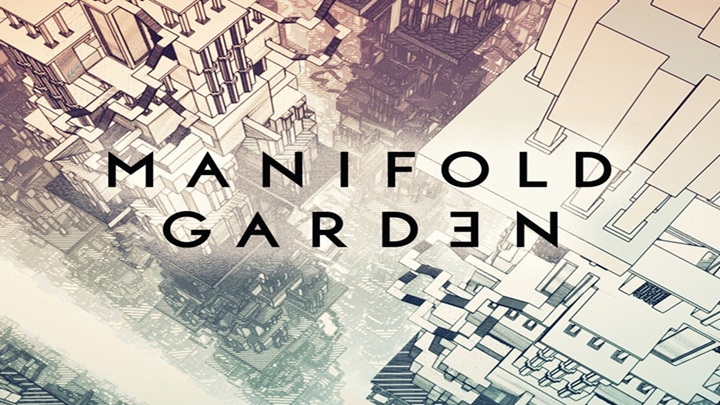
Manifold Garden transforms gravity and architecture into a continuous spatial puzzle. Players can walk on different surfaces, effectively changing their orientation and perspective on the environment.
Its enormous geometric structures create the impression of an endless world where buildings repeat into infinity. A simple change in gravity can reveal a new route or completely alter how a structure can be explored.
The game's minimalist presentation makes these impossible spaces feel strangely peaceful.
Why Players Love It
- Gravity manipulation
- Impossible architecture
- Infinite-looking environments
- Geometric puzzle design
- Beautiful minimalist atmosphere
5. Viewfinder
Viewfinder allows players to reshape their surroundings using photographs and images. By placing a picture into the environment, players can transform its contents into real, explorable space.
A photograph of a bridge can create a new path, while an image of a platform can provide a place to stand. Players gradually learn to use images as tools for changing the world around them.
This unusual mechanic makes visual perception and creative thinking essential to solving puzzles.
Why It Stands Out
- Photographs become physical spaces
- Creative environment manipulation
- Perspective-based puzzles
- Unexpected level transformations
- Strong visual experimentation
Conclusion
The most imaginative game worlds don't always follow the rules players expect. By changing perspective, connecting distant locations, manipulating gravity, or turning pictures into physical environments, these games make space itself part of the challenge.
Superliminal makes perception unpredictable, Portal 2 transforms movement into a puzzle, Antichamber challenges spatial logic, Manifold Garden reimagines gravity, and Viewfinder lets players reshape reality through images.
Together, they prove that a world doesn't need to follow familiar rules to feel fascinating. Sometimes, breaking those rules creates the most memorable adventures.
Summary
Here's a quick recap of the Top 5 Games With the Most Mind-Bending Worlds:
Superliminal – Best perspective-based puzzles
Portal 2 – Best portal mechanics
Antichamber – Most surreal world design
Manifold Garden – Best gravity-based exploration
Viewfinder – Most creative reality manipulation
These games remind us that the biggest obstacle isn't always reaching a destination—sometimes, it's understanding the world around us.
Description
What if space, gravity, and reality no longer followed the rules you know? Discover five mind-bending games that transform perception into puzzles and make the impossible feel playable.